Friday, July 22, 2011

Moving To Benque Viejo Del Carmen


Benque Viejo Del Carmen, situated on the bank of Mopan River, the western branch of the Belize River, is the westernmost town of Belize and the only official way to enter Guatemala from Belize by road. It is in the Cayo district and is approximately 80 miles due west from Belize City with the capital Belmopan about halfway between Belize City and Benque Viejo. Town of San Ignacio, Cayo District capital is 8 miles east on the Western Highway and the Town of Melchor de Mencos in Guatemala is a mile west of Benque Viejo.

History of the area goes back to the Mayan times. The presence of Tikal, Caracol, Xunantunich (see images of Xunantunich www.subratabasu.com) and several other Mayan sites in the proximity clearly indicates that this area was an active center of Mayan settlement which peaked during the Maya classical period from 200 to 900 AD. There are a number of theories why Maya civilization declined, but historians and archaeologists believe that the decline was a result of many complex factors such as possibly unsustainable agricultural practices, tribal wars, displacement by Spanish and just a breakdown of the social and economic systems. The declined occurred at different times in different regions.

The British loggers started arriving in the area as early as 1600s. The early settlers harvested logwood, which was the source of dyes. The dyes were used to stain beaver furs. However, by the end of the eighteenth century the demand for the natural dye was replaced with synthetic dyes and the loggers turned their attention to cutting down mahogany trees. Loggers set up logging camps along the Mopan River bank.  Benque Viejo which means “old bank” refers to the logging camps along the river bank. The loggers would float the logs downstream the Mopan River to Belize City, from where they would later be exported to England for making furniture. The area was still dominated by Mayans who were employed by the British loggers. There were two well established Mayan villages, Benque Viejo and Succotz, with their own Alcaldes.  Subsequently, town of Benque Viejo has been populated primarily by Spanish speaking Mestizos who are the descendants of Mayan and Spanish speaking Peteneros from Guatemala and Yucatecos from Mexico and eventually by 1900 dominated the area. The village of Succotz remained Mayan as the Mopan speaking migrants from San Jose village in Peten department of Guatemala settled in Succotz, although today most people speak Spanish as opposed to Mopan. The first visit by a Catholic priest in Benque Viejo was believed to be in 1865 with the continued presence and influence of the Catholic Church in the area. The Spanish speaking Chicleros were involved in harvesting Chicle, which was used to make chewing gum. Both mahogany and Chicle industry flourished at the turn of the century and Benque Viejo enjoyed its boom days during the first part of the twentieth century. However, due to lack of any forestry regulation, the mahogany reserve gradually ran low and the invention of synthetic Chicle ultimately caused the demise of both the industries and severely impacted the major livelihood of the area by the middle of the twentieth century.
A Statue of a Chicklero
in Chicklero Park


Benque Viejo Town Hall
Benque Viejo was established as a town in 1904. The original town was approximately an area of quarter of a mile wide by a little over a one half of a mile long. The streets were laid out in a grid pattern, parallel to the Mopan River with a number of open civic spaces scattered through out the area and with commercial activities primarily concentrated on the northeastern quadrant of the town. Relatively narrow, mostly one way streets were lined with typically two story wood frame clap board houses with overhanging balconies that created a community that was quaint, walkable, safe and friendly.  
George and Victoria Streets

Church Street
Currently, through annexation, the Town with a population of approximately 8,000 has grown more than twice of the original size creating sprawled developments with very little public service and inadequate infrastructure.

Reminiscent of  British
Rulers
Under the British authority, in 1962, Antonio Kuylen became the first Mayor elected by popular vote. In 1967 the town was dedicated to the patron Saint Our Lady of Mount Carmel and the town was renamed as Benque Viejo Del Carmel. Belize was granted Self Governance in 1964 eventually gaining its independence from British and joining the Commonwealth Countries in September of 1981. Today Benque Viejo Del Carmen has lost its lustre and its importance as a centre of commerce, but remains proud of its Mestizo heritage, a distinctive blending of primarily Mayan and Spanish history, culture, architecture, and art.

In the recent past as a result of leadership and persistence of several community leaders there has been a cultural resurgence in Benque Viejo. A “House of Culture”, one of four in the entire country, under the auspices of National Institute of Culture and History (NICH), was built in Benque Viejo in 2001 to promote cultural awareness and to inspire creativity. The town also hosts several major cultural and religious festivals that draw people from around the country and also the neighbouring countries. Visit
http://www.nichbelize.org/houses-of-culture/benque-house-of-culture.html or join their Facebook 

House of Culture
I moved to Benque on June 11, 2011 and to start my two year service. I am assigned to the Mayor and the Town Council of Benque Viejo Del Carmen. My primary assignments are to develop a master plan to revitalize the historic downtown and to create a comprehensive tourism plan for the town eventually improving the town’s economy and allowing for increased tax base. I am excited about the potentials and couldn’t have asked for a better assignment. Between my primary assignment and several secondary projects that I already know I will be involved in, I will have two busy years. The main challenge would be to work around the lack of basic resources as well as the lack of support staff to accomplish the tasks. Needless to say I will have to get very creative. My initial assessment is that the key to the success will really depend on how I can keep the community engaged through the process.

There are two other Peace Corps volunteers, Roger and Tracy, currently living in Benque Viejo. Roger works with the Town Council as I do and Tracy is a Health volunteer who works at a free dental clinic in the next village Succotz. They are both getting ready to COS (Close of Service) this October. I will be the only volunteer here for the next two years. Town Council also has a JAICA (Japan International Cooperation Agency, a Japanese version of Peace Corps) volunteer, a young Japanese architect Kota Murakami who is working on a bunch of projects.

The Peace Corps requires that every volunteer spend the first two months at the final site with a host family before moving into his or her own place. I have been staying with Guerra family in the neighboring Succotz Village.   Guerras are a young couple with two little daughters Marianny (5 years) and Belen (9 months).
Marianny
Both the Guerras are teachers and work long hours for very little pay like teachers everywhere else in this world. Unfortunate reality of our times. I have a comfortable living accommodation, but I am looking forward to moving to my own place beginning of August. It will be nice to finally have your own place after four months of living out of a suitcase.


Drive with care
Your family awaits you
Have a good trip

My life in Benque Viejo next…..        

Friday, July 8, 2011

Finally a Volunteer.....


June 10, 2011, it was one of those beautiful Belizean summer days, clear blue skies, sunny, hot and humid. It is the day when we would be magically transformed from Trainees to Volunteers to start our long anticipated service. The day started with trying to get some breakfast, which is always a challenge around the Garden City Hotel because there are no places around the there to have any kind of breakfast. There wasn’t enough time to go to the market place either. I think I got three little tacos for a dollar from the lady who puts up a makeshift taco/burrito stand every morning across the hotel and an orange juice from the Chinese grocery store, which is commonly referred to as “chiney” here.  With that taken care of, we needed to get ready for the big event: Swearing in Ceremony at the Belize House, which is the official residence of Belize Governor General, at . We all got dressed in our best outfits and got picked up and delivered at the Belize House at 10. As the guests, host families and other Peace Corps volunteers (PCVs) started to arrive at the great lawn of the Belize House and started gathering under a huge tent with about a dozen fans blowing in full blast, thirty seven soon to be volunteers were busy enjoying the moment and mingling with the crowd. I was pleased to have my host family from Salvapan come to the event and I was especially honored that my future workpartners Mayor of Benque Viejo DelCarmen Nick Ruiz and Vice Mayor Ana Castellanos representing the Town Council came all the way from Benque Viejo to join me at this special occasion.


Volunteers
With Roger German, Vice Mayor Castellanos and Mayor Ruiz

Picture taking was probably the most important activity of the morning and everyone wanted to have someway of remembering this special day. The day was truly a special and emotional day for all the volunteers of all ages, the new and the current, who made conscious decisions to serve humanity and consider it to be important enough to give up twenty seven months of their lives and to make the commitment to uphold the core tenet of Peace Corps to promote Peace and Friendship around the world.

Festivities started with Belize and U.S. National Anthems: Land of the Free and The Star Spangled Banner with the Governor General His Excellency Sir Colville Norbert Young, U.S. Charge` d’Affairs Mr. Jack Diffily, Peace Corps Country Director (CD) Nina Hernandez and Peace Corps Training Manager (TM) in Belize Jaime Brancato seated at the Head Table. All the honored guests, host families, host partners, volunteers, staff and the trainees were welcomed by Jamie, who never leaves anything for chance and has everything planned out to the last detail. She had the whole three months of training meticulously planned out to make sure that we were well trained not only worthy to be Peace Corps volunteers and to represent the United States of America well, but also be prepared to integrate well into the host country, which is one of the important aspects of Peace Corps’ approach to serving a host country. Country Director Nina Hernandez’s inspiring speech reminded everyone that we, as volunteers, bring the greatest gift of all, “gift of nothing”. We don’t bring any material gift but instead we bring love, friendship and peace. U.S. Charge` d’Affaires Mr. Jack Diffily  filled in for the Ambassador who was out of the country, told us about his own life changing experience as a Peace Corps volunteer in Togo forty some years ago and how proud he was to be swearing in the new volunteers. He then did the formal swearing in of the Class of 2011 and presented our Certificate of Completion of Pre-Service Training.
The keynote Speaker Deputy Chief Education Officer, Ministry of Education Carol Babb related to us how she was inspired to have the best penmanship by a Peace Corps volunteer when she was a student many years ago and even today she cherishes that friendship. Roger German, who I have the distinct pleasure of eventually replacing when he ends his tour of duty in October, welcomed us on behalf of the Class of 2009 and in his characteristicly eloquent way explained how Peace Corps  changes one life at a time through love and care. He talked about how Tracy Hodson, a health care volunteer  helped a little Mayan child overcome her fear of “white people” by being caring and loving. Zachary Pullin, on behalf of the Class of 2010, greeted us and applauded us for embodying the spirit of service, a service that is not about our personal goals, personal vision or personal responsibilities but it is about shared goals, shared vision and shared responsibilities

The session concluded with thank yous from the class of 2011. On behalf of the Class of 2011, Rogelio (Roy) Flores II, Melissa Ng and Taylor Munz thanked everyone in Spanish, Q’eqchi and Kriol respectively followed by a wonderful Vote of Thanks by Breezie O’Neill. We lunched on a typical Belizean dish: beans and rice, chicken, patato salad, bread pudding and coke.


Class of 2011
Cayo District Volunteers
Goofing around
In the afternoon we had our traditional “mock” rivalry of a friendly football (soccer) game between the new volunteers and the current volunteers. We beat the veterans hands down 3-0. I had to nurse my old knee for the next three days after the game. Later we got ready for an evening reception at the U.S. Ambassador’s private residence, a treat we will not forget. Everyone looked very elegent in their evening dresses as we were received by the Charge` D’Affaires and his wife at the Ambassador’s very lush and sprawling residence.


After formal welcomes, some tasty hors d’oeuvres and wine we were treated to the most delicious dinner we have had since we arrived in Belize. The menu was ceasar salad, grilled red snapper, steamed vegetables, potatoes au gratin, and chocolate cherry cake. Charge` D’Affaires was most gracious and spent time talking to all of us and shared stories of his Peace Corps days and of the various State Department assignments he had over the years. 


With Peace Corps Country Director Nina Hernandez 
With U.S. Charge` d’Affaires Mr. Jack Diffily
Well all good things come to an end and so did our wonderful evening and we headed to the hotel. Next day it was time to say good byes to each other as we got ready to move to our respective sites and start our long anticipated two years of service. Moving to Benque Viejo Del Carmen next….   

Thursday, June 30, 2011

Pre-service training


Pre-service Training (PST) essentially had three parts consisting of a week and a half of Core Issues training, eight weeks of Community Based Training (CBT), and a week and a half of Bridge to Service Training leading to the swearing in ceremony.

The Core Issues Training applied to all the trainees from the Education, Health and Business and Organization (Biz/Org) sectors. This part of the training took place in the Peace Corps (PC) office in Belmopan. It started with a cultural field trip to Dangriga. Dangriga is the center of Grifuna culture. A museum, operated by the National Garifuna Council, displays historic artifacts, pictures and documents of the Garifuna people.

Symbolizing the suffering
of Garifuna people
Memorial


Unity Dance
Traditional Dance
Pen Cayetano
Garifunas are the descendants of shipwrecked African slaves and native Caribs. They adopted the Carib language but maintained their African musical and religious heritage. The trip was complemented by a special presentation of Punta dance in traditional costumes and a visit to renowned Garifuna artist Pen Cayetano’s studio. After a delicious traditional Garifuna lunch we also witnessed making of Garifuna drums by the  Rodriguez family. These drums are carved out of pieces of mahogany, cedar and mayflower trees with chain saws, quite a spectacular sight. The trip ended with a very educational demonstration of the traditional casaba baking process from the point of getting the cassava roots to baking of the cassava bread. Other highlights during this phase of the training were visits by the Ambassador of the United States of America and Senator Hulse, an outspoken Belizean. US Ambassador Vinai Thummalapally, a native of India from Hyderabad and a Presidential appointee, who spoke about his commitment to promote the Peace Corps in Belize. Senator Hulsey gave us a very engaging and frank discussion on the history and politics of Belize.

With Ambassador Thummalapally
With Senator Hulse


Community Based Training (CBT) lasted eight weeks during which time stayed with a host family and attended Technical and Language classes. Six Business/Organizational trainees and myself were sent to Salvapan, a Spanish speaking suburb of Belmopan, for training. Typically our day consisted of language classes in the morning in our Salvapan Training Center and technical sessions in the afternoon jointly with the Maya Mopan group at the neighboring Maya Mopan Training Center. The Mopan group had four Business/Organizational trainees who were being trained in the Q’eqchi (Ketchi) language. On the weekends we also worked with Village Council leaders to teach them some basic things such as how to write a professional letter, how to take proper minutes at a village council meeting, and how to facilitate a community mapping session etc. Most interesting parts of this phase of the training were the guest lecturers and the occasional field trips. We went to Belize City to work with the Belize Youth Business Trust, an NGO that teaches young entrepreneurs how to start business of their own. There are two Peace Corps volunteers working with the group to develop an Entrepreneurial Trainer’s Guide and to train the local staff. In a country with such high unemployment especially among the youth, it was very hopeful to see young people wanting to learn how to set up their own businesses. Once they successfully complete the course they are also loaned some start-up capital and provided mentoring along the way. We were fortunate to take a trip to the  Community Baboon Sanctuary, a 20 square mile area along the Belize River extending through several Creole villages, where a Peace Corps volunteer is helping with organizational capacity building and developing strategies for promoting the sanctuary as a visitor destination, a very educational and an wonderful way to spend a morning. There are no Baboons in Belize, but Belizeans refer to the black howler monkeys that live only in Belize, northern Guatemala and southern Mexico as Baboons. They are considered endangered and are protected by the Government of Belize. They have a distinctive deep howl that reverberates through the villages. Due to the effort of this truly community based grass roots conservation organization the black howler monkey population has made an amazing comeback in Belize.

Walk along one of the villages
Black Howler monkey AKA Baboon


Another interesting trip was a visit to the Flowers Bank Community Group that makes organic Cohune Oil for cooking, and several by-products such as soap and massage oil. Cohune, a palm tree protected in Belize and requires a permit to cut down. Every part of the tree is used for something: leaves are used for building roofs, another part of the tree is used for making fly swatters, the core of the tree, called Cohune cabbage for cooking a delicious meal and the nuts used for making oil. The nuts have a distinctive nutty taste with bit of a coconut flavor. The traditional laborious methods of husking and crushing the nuts have been replaced by locally made simple machines that have made life so much easier and the product more accessible to a wider market. A couple of the Peace Corps trainees worked with this group to help with pricing and marketing their products.

Traditional Cohune husker
Modern husker


Sifting after hasking
Grinding

                                     
                                                     A neighbor stopped by to see what was going on

A visit to the Toledo Cacao Growers Association and a trip to a Cacao farm were an eye opening experiences for me. Another Peace Corps volunteer has been helping the Association to improve their data base, set up websites and develop outreach materials. Most people I know would love a bar of good chocolate but I am not sure how many of us know “where chocolates come from?” Well it all starts with the Cacao fruit. These fruits have multiple seeds inside and each seed has a covering of slightly sweet and tangy white flesh. Once the seeds are taken out of the fruits, they are allowed to ferment and then dry for several weeks. Farmers bring their seeds to the Growers Association who in turn sells them to the chocolate makers. The seeds will then be dried in a commercial drier, ground to a fine powder and mixed with milk and other ingredients. This mixing can take as long as three days of constant whipping at a certain temperature in a special mixer to create that creamy consistency. The delicious creamy paste is then poured into molds and put in a special freezer. It is then wrapped and sealed in foil which keeps it air tight and slipped into the manufacturer’s wrappers.

Cacao fruits
Dried cacao seeds 
Inside the fruit
Cacao testing


                                          A small chocolate factory


The CBT ended with a bang with a visit to Xunantanich, a Mayan ruin (see images on http://www.subratabasu.com/) and then moving back to Belmopan for the big day when we were given our site assignments. I must say that in spite of all the anxieties about the final site assignments and endless worries about who is going to get placed where and with whom, most everyone was pleased with their assignments. I was happy to have been assigned to the Town of Benque Viejo to work the Mayor and the Town Council on revitalizing the town’s historic core and developing a master plan to promote tourism.

And finally the Pre- Service Training ended with the Bridge to Service, which consisted of a number of logistic and policy types of sessions and most importantly with completing the Reflection Wall, a drawing of a huge tree. As each of us reflected on ten of the Peace Corps core expectations, we wrote our reflections on paper leaves and added them to the leaves.

Reflection Tree
Then came the day where we were sworn in as Volunteers…….coming up next.           

Tuesday, June 21, 2011

The training begins….


Welcome to the Peace Corps and to the world of acronyms. From the very first day when we arrived at the PC office for our PST, TM took charge of all PCT’s. We were all introduced to CD, DPT (previously known as PTO), PCMO, AO, APCD (also known as PM), SSC, TTs, LCFs, LTCs and rest of the staff who didn’t yet have any acronyms. PST started with going over the COTE, which laid out a detailed time line for the next three months of all the CBT sessions, a calendar for all TT and LCF classes, the dates for the PACA assignment, core TAP, sector TAP were due and when the initial and final TAP interviews would be conducted. TT at the CBT was all about learning how to use PACA tools, doing FREEHOP and SWOT matrices through NFE techniques with a clear understanding of RVID, always keeping GAD in mind and looking forward to SDLs. The SSC talked to us about how to scan your surroundings to look for potential trouble, helped familiarize ourselves with EAP, EP, NEMO and the roles of RSO and RSSO and required us to memorize the telephone number of the DO. The SSC also told us why the SLFs and PSPs are so important. PAC based on PDM goals worked with HCA/HCN and found suitable matching sites for the PCTs. The CD went over the policies and explained what would get us an ET, MS, AS before our scheduled COS. The volunteers were given opportunities to get involved in VAC, VAD, WID, GLOW and may soon be able to join BLOW. During your service every PCV is afforded several ISTs to make sure they are on track. If all goes well you would COS at the end of the twenty seventh month. If you are in the PC’s good graces and have the power of persuasion, you may even become a PCVL and linger for another year before you become a RPCV.  You get the idea about what I mean about acronyms, but as I do my blogs I will try to tell you what most of them mean.

Garden City Hotel in Belmopan
The Pre-service training (PST) started the day after we arrived in Belize. The first week and a half of the training happened in Belmopan at the Peace Corps (PC) office. As a note of interest, Belmopan, I am told, is the smallest national capital in the world. While in Belmopan, we stayed in the “Garden City Hotel”, a relatively new, but very cheaply built hotel owned by some local Chinese people, who seem to have taken over most of the businesses all over the country. There is no registration desk, you pick up a key from the hardware store across the street. You only get one key, even if you are sharing a room with another volunteer. If you lock yourself out after the store closes, well good luck!!! In this newly built hotel, everything from the brand names on the toilet bowls to all the electrical controls are in Chinese. This really didn’t seem to matter much, though, because most of the controls didn’t work anyways. When taking a shower you had either only hot water or only cold water; it was impossible to get a right blend of hot and cold water. If you did take a cold or a hot shower you would, without fail, flood the floor of the bathroom, which sometimes smelled strange. You also needed to be careful while in the bathroom, since people in all the adjacent bathrooms could hear every word you said. On the bright side, the hotel did have air-conditioning, which worked most of the time, as well as access to WIFI if you sat directly under the router in the hallway.     
My host family Caseres had two sons, five daughters and seventeen grandchildren. Four of the seventeen grandchildren lived in the same house that I was staying, while the other eight or so lived close enough for very frequent visits. Although the number of children running around at any given time was sometimes an issue for me, the most enjoyable part of my host family experience was my relationship with the children. When I went back later to visit, the kids were the first ones to notice my arrival and came running with great enthusiasm to give me a hug and say they missed was very touching.

My host "Padre y Madre"
Casa de Caseres
My Bedroom
And here are some of the kids....
Brandon, the terrible 
Dianne
Patti with Brittney and Dion 
Imari, my favorite
Jorge


Jeffery


It took some adjusting to get used to the lifestyle and the food, especially the food. Speaking of food, let’s just say that this is not a country where cooking has become an art-form by any stretch of the imagination. At the risk of stereotyping, I would say rice, beans, and chicken with some potato salad is probably considered the national meal. Cooked beans or refried beans with either flour or corn tortillas can be for breakfast or dinner or both. If can embellish it with scramble egg and some “queso blanco” on your beans. Variety is not the word that comes to mind when you think of food. I am in the lookout for couple of "caldo de pollo" (soup) or pork stew receipes. A dish called "chimole" ( chicken stuffed with ground beef and "recado negro") is a delicacy, but I don't really care for it. If you are really desperate for variety, then you go out for Chinese. In some areas that is the only alternative available to you.

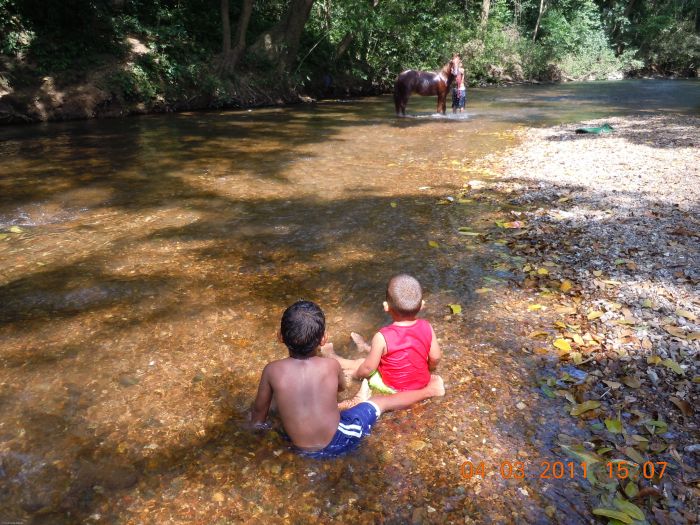
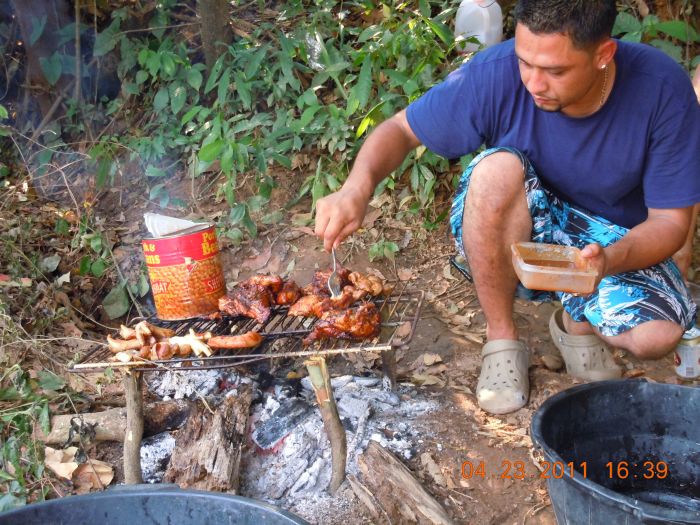
Most people in Salvapan and the surrounding area are working class people and families spend most of their leisure time and the weekends going to farms or to the nearby “rio” for a swim to cool down, a picnic and and opportunity to do  the weekly laundry. The river is an essential part of life here.

Swimming in the river
River is not just for people
Oscar, my other favorite, lives with his grandparents

Make shift barbecue grill
Highlights of the Community Based Training (CBT) next……..